Source New Engine Cylinder Liner Set for Trucks and Excavators
Explore 30 listings for the new engine cylinder liner set, featuring OEM quality parts for cars, trucks, and excavators. Compare specifications like CE and ISO certifications, aluminum alloy materials, and 12-month warranties to find suitable dry cylinder liners for your machinery needs.
Key considerations
Products List




Comprehensive Sourcing Guide
New Engine Cylinder Liner Set Sourcing Guide
Procuring a new engine cylinder liner set requires careful attention to specific model compatibility and material integrity. Buyers should verify that the listed product matches the exact engine architecture, such as the 04253771 or 04231519 specifications observed in current listings. These components are critical for maintaining compression and reducing wear in heavy-duty applications like trucks and excavators.
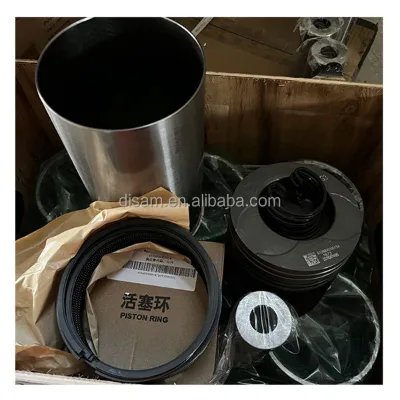
Sourcing decisions must also account for the physical condition and packaging standards to ensure safe transit. The market frequently lists items as "New" with "Carton" or "Standard Package" protection, which helps prevent damage during shipping. Confirming that the supplier provides a "12 Months" warranty is essential for mitigating risks associated with premature failure or manufacturing defects in these high-stress engine parts.
Product Scope and Observed Listing Signals
The current market offers a diverse range of cylinder liners, including dry types and complete cylinder block assemblies. Listings often specify aliases such as "Cylinder Liner" or "Engine Part" alongside specific model numbers like 4695315 or 6D15T. Buyers must distinguish between generic descriptions and precise part identifiers to ensure the liner fits the intended engine block without modification.
Observations indicate that suppliers often list these parts with varying packaging types, from standard cartons to wooden packs. Some entries highlight customization availability, suggesting that non-standard dimensions or specific material requirements can be met. However, buyers should treat these customization claims as observations rather than guarantees, verifying the actual capability of the supplier before committing to a custom order.
Technical Specifications to Verify
Technical verification begins with confirming the material composition, as listings show variations between aluminum alloy and stainless steel options. The specific application, whether for a car, truck, tractor, or excavator, dictates the required durability and thermal properties of the liner. Buyers must cross-reference the listed material against the engine manufacturer's original equipment specifications to avoid performance issues.
Dimensional accuracy and standard compliance are equally critical, with some products citing standards like "Crank linkage mechanism" or specific weight limits such as 8kg. The model number, such as Cummins 6CT-131, serves as a primary identifier for compatibility. It is vital to ensure that the listed model number matches the engine's serial number and that the product origin, often noted as China or Shandong, aligns with the buyer's supply chain preferences.
Compliance and Safety Documentation
Certification status is a primary indicator of product reliability, with many listings displaying CE and ISO marks. Some entries combine certifications with warranty terms, such as "ISO Warranty:12 Months," while others list "ISO 9001" alongside material specifications. Buyers should request valid certification documents to confirm that the manufacturing process adheres to recognized international quality management systems.
Safety and operational documentation must also be scrutinized, particularly regarding pressure ratings and power sources. While some unrelated listings mention pneumatic power or atmospheric pressure, cylinder liners are passive components where structural integrity is paramount. Ensuring that the supplier provides a machinery test report or quality guarantee is essential for validating that the liner meets the necessary safety thresholds for high-load engine environments.
Cost Drivers and Commercial Terms
Pricing in this sector varies significantly, with observed ranges spanning from 1 to 10,000 USD depending on the part complexity and volume. The minimum order quantity (MOQ) is frequently listed as 1 or 1PC, offering flexibility for small-scale procurement. However, buyers should be aware that unit costs may fluctuate based on material prices, such as the difference between aluminum alloy and stainless steel variants.
Commercial terms regarding delivery and lead time are critical for production planning, with some suppliers offering a 7-day delivery window. Packaging choices, ranging from cartons to wooden packs, can also influence the final landed cost. Buyers must clarify whether the quoted price includes all necessary documentation and certifications, as these factors can impact the total cost of ownership and the speed of project execution.
Supplier Qualification and Quality Control
Supplier qualification should focus on their ability to provide consistent quality, often indicated by terms like "OEM" or "Guaranteed." The presence of a "12 Months" warranty suggests a level of confidence in the product's longevity, but buyers must verify the specific terms of this coverage. It is advisable to check if the supplier has a history of providing machinery test reports to substantiate their quality claims.
Quality control processes should be transparent, with suppliers expected to demonstrate adherence to standards like "ISO TS" or specific packaging protocols. The origin of the product, whether from Hebei, Shandong, or other regions in China, can influence logistics and quality consistency. Buyers should prioritize suppliers who clearly define their quality assurance steps and provide evidence of their manufacturing capabilities before placing large orders.
Long-Term Procurement Checks
Establishing a long-term relationship requires ongoing verification of product consistency and supplier responsiveness. Buyers should regularly audit the delivered goods against the initial specifications, such as the model number 04253771 or the material type. Continuous monitoring ensures that the supplier maintains the same quality standards and that the warranty terms remain valid over time.
Future procurement strategies should also consider the availability of customization and the supplier's capacity to handle fluctuating demand. Tracking the lead times and delivery performance of the supplier helps in planning inventory levels effectively. By maintaining a disciplined approach to supplier evaluation, buyers can secure a reliable supply chain for critical engine components like cylinder liners.
FAQs
What certifications are available for new engine cylinder liner sets?
New engine cylinder liner sets typically carry CE and ISO certifications to ensure compliance with international standards. Some listings also mention ISO 9001 or ISO TS standards. These certifications verify that the manufacturing processes meet quality management requirements. Buyers should verify specific certification documents with the supplier before placing orders to ensure regulatory compliance in their region.
Can I customize the new engine cylinder liner set for specific applications?
Yes, customization is available for new engine cylinder liner sets to fit specific machinery requirements. Suppliers offer options for different materials like aluminum alloy or stainless steel. Customization extends to color, packaging, and specific model adaptations for trucks, excavators, or tractors. Buyers must provide detailed specifications to ensure the customized liner fits their engine block or cylinder assembly correctly.
What is the typical lead time for ordering new engine cylinder liner sets?
The typical lead time for new engine cylinder liner sets is approximately seven days. This delivery time allows for efficient processing and shipping of the parts. Buyers should confirm the exact delivery schedule with the supplier, as it may vary based on order volume and customization needs. Prompt communication ensures that the parts arrive in time for machinery maintenance or assembly schedules.
Which materials are commonly used for new engine cylinder liner sets?
Common materials for new engine cylinder liner sets include aluminum alloy and stainless steel. These materials are chosen for their durability and resistance to wear in high-pressure environments. The choice of material depends on the specific engine type and operating conditions. Buyers should select the material that best matches their engine's performance requirements and longevity expectations.
What is the minimum order quantity for new engine cylinder liner sets?
The minimum order quantity for new engine cylinder liner sets is often one piece. This low MOQ allows buyers to test quality or replace single units without committing to large volumes. Some suppliers may have different MOQs for customized or bulk orders. Buyers should check the specific supplier's policy to understand the minimum purchase requirements for their transaction.
How is the new engine cylinder liner set packaged for shipping?
New engine cylinder liner sets are packaged in cartons, standard packages, or wooden packs to ensure safe transit. The packaging is designed to protect the parts from damage during shipping. Some suppliers use standard packaging for bulk orders, while others provide wooden packs for extra protection. Buyers should specify their packaging preferences to ensure the parts arrive in optimal condition.